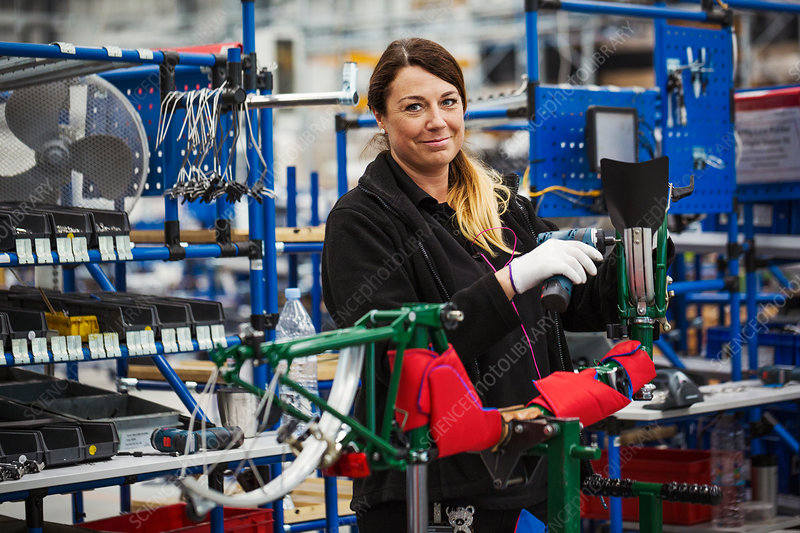
Job Title: Factory Worker
Location: East Gwillimbury, Ontario
Shift: Morning, Night, Overnight
Wage: $22.60/Hour
IIQAF is a dynamic and innovative company that specializes in the manufacturing of high-quality industrial equipment. We are currently seeking a skilled and detail-oriented Factory Worker to join our team.
This is an exciting opportunity for individuals who are looking to make their mark in the manufacturing industry and be a part of our growing company.
As a Factory Worker at IIQAF, you will be responsible for the efficient and effective operation of our production line. Your main duties will include assembling, inspecting, and packaging equipment according to company standards.
In addition, you will be expected to maintain a clean and safe working environment and assist in the continual improvement of our manufacturing processes.
Key Responsibilities :
- Accurately and efficiently assemble equipment according to company standards and procedures.
- Inspect finished products to ensure they meet quality standards.
- Package and label products for shipment.
- Maintain a clean and organized work area.
- Follow all safety protocols and report any safety hazards.
- Participate in training and meetings to improve skills and stay up-to-date with company procedures.
- Identify and communicate any issues or defects in the manufacturing process.
- Assist in the continuous improvement of our production processes.
Requirements
- High school diploma or equivalent.
- Prior experience in a manufacturing or production environment is preferred but not required.
- Ability to follow instructions and work in a fast-paced environment.
- Good communication and teamwork skills.
- Strong attention to detail and ability to follow processes accurately.
- Ability to operate basic tools and equipment.
- Basic computer skills.
- Must be able to lift at least 50 lbs.
- Must be able to stand, bend, and squat for extended periods.
Benefits
- Health Insurance
- Accommodation
- Transportation
What skills and qualities are important for a Factory Worker?
Being a successful Factory Worker requires a combination of technical skills, physical abilities, and personal qualities. Here are some important skills and qualities for a Factory Worker:
- Technical Skills: Factory Workers should possess specific technical skills relevant to the type of factory they work in. This can include operating machinery, understanding assembly processes, following manufacturing instructions, and utilizing tools or equipment. Familiarity with industry-specific processes and equipment is crucial for efficient and safe production.
- Physical Stamina and Strength: Factory work often involves physical labor, requiring endurance, strength, and the ability to stand for extended periods. Factory Workers may need to lift heavy objects, perform repetitive tasks, and work in physically demanding conditions. Good physical stamina and fitness are essential.
- Attention to Detail: Factory Workers must pay attention to detail to ensure accuracy and quality in their work. This includes following instructions precisely, inspecting finished products for defects, and adhering to quality control standards. Attention to detail helps prevent errors, reduce waste, and maintain production efficiency.
- Hand-Eye Coordination: Many factory tasks require excellent hand-eye coordination to perform precise movements, handle small parts, or operate machinery accurately. Hand-eye coordination helps with tasks such as assembly, packaging, or operating control panels.
- Technical and Mechanical Aptitude: Having a natural aptitude for understanding technical or mechanical concepts is valuable for Factory Workers. This includes being able to troubleshoot basic equipment issues, make minor adjustments, or understand machinery operations.
While formal education may not always be required for entry-level Factory Worker positions, specific certifications or training programs may be beneficial depending on the industry or type of factory. Additionally, demonstrating a positive attitude, a willingness to learn, and a strong work ethic are valuable qualities for success as a Factory Worker.
What education and certification are required to become a Factory Worker?
The education and certification requirements for becoming a Factory Worker can vary depending on the industry, the specific type of factory, and the employer’s preferences. In many cases, formal education beyond a high school diploma or its equivalent may not be required. However, certain certifications or training programs can enhance job prospects and provide valuable skills. Here are some relevant options:
- High School Diploma or Equivalent: A high school diploma or its equivalent is typically the minimum educational requirement for entry-level Factory Worker positions. It demonstrates basic educational attainment and foundational skills.
- On-the-Job Training: Many employers provide on-the-job training for Factory Workers. This training covers specific tasks, procedures, and safety protocols related to the production processes in the factory. On-the-job training enables individuals to gain practical skills and knowledge directly in the factory environment.
- Industry-Specific Training Programs: Some industries offer specialized training programs or apprenticeships for Factory Workers. These programs focus on developing the necessary skills and knowledge for the specific industry or manufacturing processes. They may cover topics such as machine operation, assembly techniques, quality control, and workplace safety.
- Technical or Vocational Education: While not always required, completing technical or vocational education programs in fields related to manufacturing or industrial operations can provide a solid foundation of knowledge and skills. These programs may include coursework in areas such as machine operation, industrial technology, manufacturing processes, or quality assurance.
- Forklift Operator Certification: If the factory involves the use of forklifts or other material handling equipment, obtaining a forklift operator certification may be beneficial. This certification demonstrates competence in operating forklifts safely and adhering to applicable regulations.
It’s important to note that the specific requirements can vary significantly depending on the industry and the employer’s preferences. Some factories may have specific training programs or certifications tailored to their operations. Additionally, certain industries may have regulations or safety standards that require employees to complete specific training or hold relevant certifications.
To determine the specific education and certification requirements in your desired industry or factory, it is advisable to research job postings, consult with potential employers, or reach out to industry associations or trade organizations associated with manufacturing or the specific industry of interest.
While formal education and certifications can enhance job prospects and provide a foundation of knowledge, demonstrating a strong work ethic, a willingness to learn, and the ability to follow safety protocols are important qualities that employers often value in Factory Workers.
Who can apply to this job?
The employer accepts applications from:
- Canadian citizens and permanent or temporary residents of Canada.
- Other candidates with or without a valid Canadian work permit.
How to apply
What is the work environment like for Factory Worker?
The work environment for a Factory Worker can vary depending on the type of factory and the specific tasks involved. Here are some general aspects of the work environment that Factory Workers may experience:
- Industrial Setting: Factory Workers typically work in large industrial facilities or production plants. The environment may include machinery, equipment, assembly lines, or specialized workstations specific to the factory’s operations.
- Shift Work: Factories often operate on multiple shifts to maximize production capacity. Factory Workers may work day shifts, evening shifts, night shifts, or rotating shifts, depending on the factory’s schedule. This can provide flexibility but may also require adjusting to different work hours.
- Noise and Machinery: Factories can be noisy environments due to the operation of machinery, equipment, or production processes. Factory Workers should be comfortable working in such conditions and follow safety procedures when working near or around machinery.
- Safety Precautions: Safety is a top priority in factory environments. Factory Workers must adhere to safety protocols, wear appropriate personal protective equipment (PPE), and follow safety guidelines to protect themselves and others. This includes being aware of potential hazards, such as moving machinery, electrical equipment, or chemical substances.
- Teamwork and Collaboration: Factory work often involves working as part of a team. Factory Workers may collaborate with colleagues, supervisors, or other staff members to achieve production goals. Effective communication, cooperation, and the ability to work well with others are important in a team-based environment.
It’s important to note that the specific work environment for a Factory Worker can vary based on the industry, the type of factory, and the specific production processes. Each factory may have its own unique dynamics, safety protocols, and requirements.